
Social Impact Advisory Meeting, July 2024
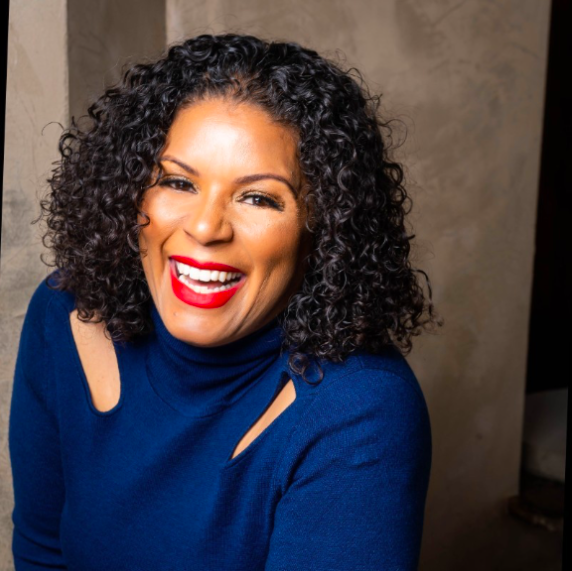
Adimika Meadows Arthur (Panelist), Founding Executive Director of Health Tech for Medicaid.
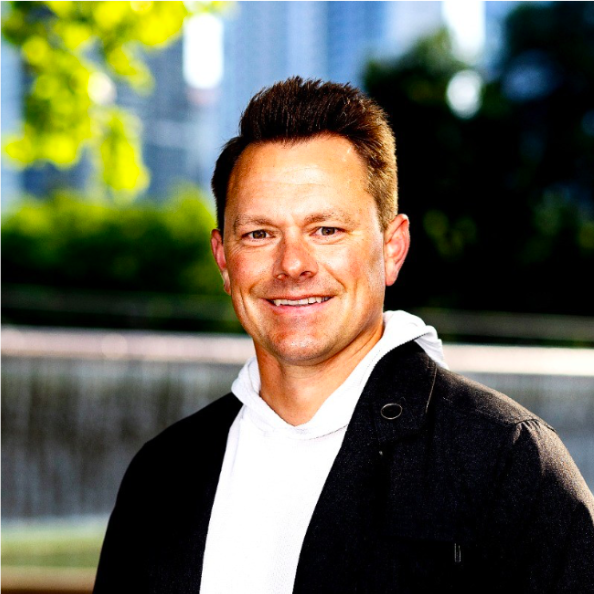
Ben Brittingham (Panelist), CEO of Bedrock Branding

Blase Bova (Panelist), Executive director of St. Vincent de Paul of Alameda County
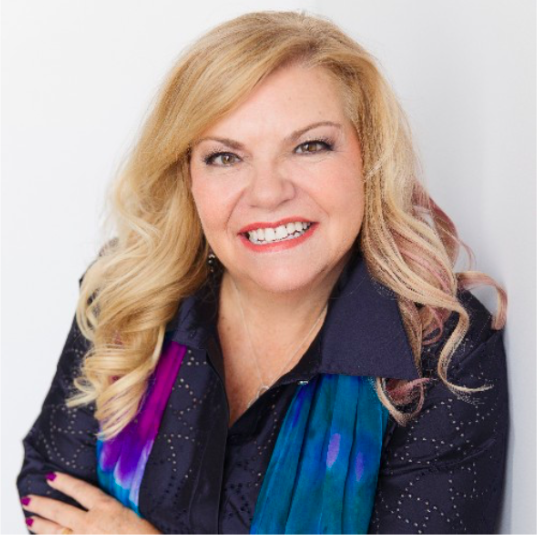
Dale Marie Golden (Moderator)
At our monthly Social Impact Advisory Group meeting, we wanted to explore business and nonprofit partnerships. We invited moderator Dale Marie Golden and panelists, Adimika Meadows Arthur, Ben Brittingham, and Blase Bova, to discuss how businesses and nonprofits can work together to tell each others’ stories. The following panel presentation was edited for length and clarity in digital format.
Adimika: I am an epidemiologist by training and have a pretty traditional first part of my career, which is very public health oriented. I worked for a couple local public health departments and the Centers for Disease Control in the middle. That is actually how I got to California. I am one of the authors of the 1115 waiver in the state of California, which is the technical waiver that has expanded Medicaid, so I’m affectionately known in this country as Madam Medicaid, only because California was the first state to expand Medicaid.
I spend my days today running a nonprofit called Health Tech for Medicaid. I took my background and being known in an area that I care passionately about, which is underinvested and under looked populations. My interest is really modernizing and providing innovation in the Medicaid space. And that’s through products, services, delivery systems and capital markets.
Ben: I’m the CEO of Bedrock Branding. Over my 24 years of sales and marketing before I started my business, I found that every business I ever worked for had some sort of community contribution plan or typically called XYZ business cares. Sometimes that’s for recruiting, a lot of times it’s just for brand development. What I found is that a lot of businesses either didn’t do it because they didn’t want to do it poorly or didn’t want to come off as they were patting themselves on the back. Or they did do it and it could come off poorly or just certainly not in the way they wanted to.
I work with all of my clients in this area and I think there’s some very basic creative things that both nonprofits and corporations can do to leverage some of the work that they’re already doing or help them identify how do they want to get into that space in a way that’s truly meaningful to them and not just following a trend.
Blase: I’m the executive director of St. Vincent de Paul of Alameda County. We are a very, very volunteer driven human services nonprofit that feeds, clothes, houses, and heals those in financial need in our community. Our emergency shelter and charity dining room are the largest of their kind in Oakland. We have drop in centers for unhoused people, a food bank, culinary training program, workforce development, and a network of volunteers all over Alameda County that do eviction prevention by meeting families in their homes and helping with rent and utility bills and keeping them in their homes as well as offering furniture and beds from our thrift store and food boxes on a regular basis.
I’ve been with St. Vincent DePaul in three different counties in two different states for 27 years now. But I’ve been in this position in Oakland for about 11 years and I’m delighted to be on this panel because volunteerism and partnerships with for profit and nonprofit businesses are, I think, one of the things that we’re very good at and that I really believe in.
Dale Marie: Adimika, tell us how your organization currently partners with businesses and how you create that connection between your nonprofit and the for profit sector, including both startup companies and venture capital funds.
Adimika: My organization is called Health Tech for Medicaid. So just in the name alone, it indicates that we spent a lot of time with folks in the health technology ecosystem. We were kind of born with the premise and the ethos that we would have health equity and tech equity come together.
And so in order to do that, we really are an ecosystem builder. So we work with payers, providers, policymakers, entrepreneurs, investors, and advocates, but most importantly, we center all of our work on the equitable and inclusive design of the 95 plus million individuals on Medicaid and their caregivers.
So we work a lot with the private sector, also in the public sector, it’s how we are born and bred. We do that through a couple of different mechanisms. So for instance, we have a campaign right now called venture for Medicaid.
We really advocate for an approach that is a public health analogy similar to a crosswalk. We want everyone to be able to cross the street. In most of America that has been a universal design methodology, right? That’s whether you have ambulatory issues, whether you’re blind, whether you’re a young child. That’s where we want to meet the public and private sector. We also work a lot with philanthropy, and spend a ton of time with venture capital.
Dale Marie: Ben you’ve had a lot of experience creating partnerships between nonprofits and local business organizations as both a volunteer and a marketing business owner. What have you found to be the most successful ingredients to creating a successful partnership?
Ben: So you finished with successful partnership and I think that we have to start with a win-win. What is the win for the nonprofit and what is the win for the corporation? Nonprofits typically want a handful of things. They want financial contributions. They want more donors for financial contributions, and they want more awareness for more financial contributions.
Depending on your organization, maybe you’re looking for volunteers and things like that, but typically it comes down to money, money, money. What do corporations want? Well, they want to be able to show community impact. They want to be able to increase brand equity to whatever stakeholder audience. Again, it could be your new recruits. It could be your customers. It could be your vendors. I think telling each other’s story of the why. Why do you give? Why does that nonprofit serve? How do they serve and who do they serve?
It truly accomplishes the goals of the win-win for the nonprofits and the corporations. Because otherwise the nonprofit is getting a one-time check. I think there’s an opportunity there for the nonprofit and business partnership. It starts as an initial investment and looking at how businesses look at it, and most nonprofits are on a really skinny budget and don’t have a big marketing budget.
Pushing nonprofits to think like a business and asking businesses to think about their nonprofit like a marketing and branding exercise instead of just a community contribution element can get everybody to that win-win.
Maybe they don’t even have marketing in-house expertise, but that business does. They have a marketing team and they have a marketing budget. If it’s a video or if it’s a social post, or if it’s some of those things that both entities can use to leverage it, you can get a way bigger ROI than just writing a check and putting a nonprofit logo on your corporate website. Pushing nonprofits to think like a business and asking businesses to think about their nonprofit like a marketing and branding exercise instead of just a community contribution element can get everybody to that win-win.
Dale Marie: Blase, St. Vincent DePaul of Alameda County has an 80 year history in this community and its partnership with both local government and the business sector. You have been at the helm through many economic challenges, including the pandemic. What is the secret to engaging local business leaders and developing a partnership from your experience?
Blase: We’re very focused on it. We know that that’s our secret sauce. When people get engaged with us in one way or another, it leads to more engagement and more awareness wider than that person in the community.
The key words that have been tossed around in the last few minutes are really what we’re all about. Engagement and partnerships. We’re very good at it. We’re very focused on it. We know that that’s our secret sauce. When people get engaged with us in one way or another, it leads to more engagement and more awareness wider than that person in the community.
Being a very volunteer driven nonprofit, we depend on volunteers, and we are very good at working with volunteers, including using them at their highest and best use if they want to be. Even before we start talking about volunteers, it’s about the fellowship of the people that are part of St Vincent DePaul, working together and serving others in that fashion.
But when it comes to the partnership, I really go the other extreme and really just focus on what a corporation might want to get out of this: the brand marketing, cause marketing, the association with a particular issue like homelessness and being part of the solution to a local problem like homelessness, the idea of helping feed people, the team building aspect, the skill, show-off aspect of, what a corporation can help us do with their professional expertise and just lots of other areas like that.
Dale Marie: Adimikia, what are the challenges nonprofit leaders should consider when entering into partnerships with companies, both local and national? What advice would you give for-profit leaders before they engage in a partnership with a nonprofit?
Adamikia: Nonprofits are businesses. We don’t make a profit, right? We reinvest if we do have any leftover for the year back into our business model. I think there’s a confusion sometimes that people that run nonprofits are not business leaders. It’s a huge magnitude shift, but the work isn’t different. We just are mission-oriented versus margin-oriented. This is the hardest job I’ve ever had because I literally have to ask for money all the time in order for my staff to stay sane and for me to pay a living wage to people.
I think that there’s this expectation that nonprofits don’t have to operate in the same way as everyone else — we do. We pay taxes, we follow rules, we need services, we have accountants, and we have lots of different things that keep us moving. We get the beautiful opportunity of working with federal folks, national folks, and local folks across the country.
I think working with local businesses, working with local philanthropy, working with large corporations that have outposts all across the country that have different business units with different business needs and then working nationally, and federally, all have its own challenges.
I think the biggest one is that there’s an expectation that nonprofits are put to more scrutiny than for profits are. In order for us to get a little bit of money, it takes a lot of reporting and a lot of time and people want to be ingratiated a lot more.
Those partnership alignments really enrich the way that the community sees you… So it’s a great way for corporations to actually have a partner and do great work that they’d like to do versus just writing a check.
I have to stay in relationship with people. That relationship building also costs money and it’s significantly time consuming, too. So I think on the side of for-profit businesses, we need you as partners. Those partnership alignments really enrich the way that the community sees you. Oftentimes we are trusted entities. So it’s a great way for corporations to actually have a partner and do great work that they’d like to do versus just writing a check.
Sometimes it’s the ability for their staff to be involved in volunteer work. Sometimes it’s the ability for them to actually understand how the problem statement impacts their actual workforce. This is the hardest job I’ve ever had in my life. I just compartmentalize and look at the work in a different way. I get an opportunity to do good every day in a different way, and I get to shape and change policy that I wouldn’t be able to do unless in this sort of a seat.
Dale Marie: Ben, how would you advise nonprofit leaders who are looking to engage the corporate sector for the first time? What are the key areas they should look for in a partnership?
We talked about the why, but understanding the businesses’ why can tell you what they want to get out of it as well. Are they looking for recognition? Are they just looking to spread the word about your cause? I think looking at it as a business or looking at it as a client, they’re a stakeholder.
I think some really low hanging fruit that nonprofits can do is create things to give their corporate donors credit. Simply creating a donor of the year or donor of the month and naming somebody who wrote you a check. It costs you nothing and is an excuse for you to talk about them and them to talk about their partnership.
I also think understanding the why is helpful to say is it truly authentic or are they just trying to pick the latest fad that’s there. One of the best responses I’ve gotten is from the number one real estate broker in Washington state.
We were talking about what he was going to do and we talked to a whole bunch of different really heart tugging initiatives. What did he care about? His community and his kids. So we partnered with Zgirls who do confidence programs for 11 to 14 year old girls. We sponsored the Lake Washington High School Booster Club. The biggest response we got was the focus on the baseball and softball diamond club booster club. Why? Because people care about their kids as well and they were so excited about their kid playing for this organization.
They had a great legacy and we were able to tag all 35 different diamond club sponsors in a post because we created the content. It wasn’t just a one time thing. It was 35 other businesses that were all holding their hand in this marketing approach with my client as the forefront of that.
So it’s a little bit of creativity, but a lot of times it’s right in front of you and it costs you nothing and in some cases a thousand or two thousand dollars to create a great marketing piece. If you can spend two or three thousand dollars and get 25, 000 back in return, that’s an ROI, and it’s fantastic.
I think from a corporation standpoint, we talked about in kind as well — asking them for in kind, asking can I borrow your marketing team. You have a digital team, you’ve got a creative team, you’ve got a graphic designer. Instead of writing me a check for $3,000, can you volunteer three or four hours of their time to do that for me? They’re more than willing to do that. It happens all the time, saves you money and you’re getting that engagement and that relationship with them.
Dale Marie: I think that’s a good reminder to all of us that sit on boards and are asking, thinking we just got to ask for money. There’s just so many other opportunities that actually could end up leading to money and a lot more. Blase, a common concern we hear from business leaders is that nonprofits are always in the fundraising mode, and if you’re already supporting several nonprofits, how would you engage with other nonprofits if your philanthropy budget is already allocated? Can a business leader still provide value beyond just donations to a nonprofit?
Blase: The answer is yes to the last question. I like going after Ben because it’s great to hear someone on the other side of this equation, on the for-profit side, working with for-profit businesses and speaking from the same hymn book that I always speak from.
It’s not a handout. It’s the why, it’s the partnership, it’s the engagement. It’s any number of different ways to create that begin that relationship and then develop it. I hardly ever get around to asking for money because we’re trying to engage them in all different ways and they wind up getting themselves to the point where they want to help financially.
At St. Vincent de Paul in Phoenix, where I used to work, we had a program called Fresh Perspectives, a whole makeover program. Our regular St. Vincent de Paul volunteers make home visits in the homes of people in need. When they identify a family with a home, whether they own it or rent it, that needs a little TLC and some brightening up, they would refer that family to one staff member.
She would go out, take pictures of the home, take pictures of the family, get their story, and put it into a page of a little book. Then she would shop that around along with the pictures of other families and also families that had already been helped. She would bring that to corporate offices and literally talk to the CEO or talk to the HR director. What family do you feel a connection to that you want to spend your time and your energy working together to help?
They would identify a family that resonated with them, and then they would adopt the makeover. The marketing department might be in charge of the little boy’s room and try to find all the Spider Man things that they could; the art department or the sales department might be in charge of the kitchen, and they’re trying to get the kitchen as nice and friendly and user friendly as they can for parents to cook meals for these kids, and it was almost like a competition. On a Saturday, the movie tickets to spend a few hours out of the house and this makeover just happens incredibly quickly. The photos of that group in action and having a great time painting, getting dirty and messy, carrying things and working hard and then the photos of the family coming back and seeing the dramatic difference in their home and how that makes them feel like it’s a real home again.
When you take those photos of finished projects, the before, the during, and the after out to corporations, folks love it. Real excitement, real engagement, but done as an offering to corporations to say, what do you like? What’s your fancy out of this whole box of chocolates and what would really meet your needs and your interests? What would you get excited about?
Adimika: I just want to add one point which is that those checks still do matter. We love in kind support, but without the checks, the service actually doesn’t get there.
And there is an expectation that nonprofits exist forever. We have to shut our doors if we cannot meet our mission, no different than businesses do. I just wanted to at least throw that plug in there that we need the volunteerism, we love the partnership therein, but we also need the checks too.
Sandra Becker: I’m curious about your thoughts on partnering with organizations who have the same goals, whether they be for-profit or non profit, and whether you have experience doing that? How has that worked in any learnings that you took away from doing that?
Ben: On the corporate side, there’s plenty of opportunities for vendors and subcontractors to be involved in the same mission. I work for a home builder and our way to support this local community outreach program was to give them 100 percent of the profits from a home.
So what we were able to do is then go to every one of our suppliers along the way and say, do you want to partner with us? Do you want to donate or discount the HVAC unit, the siding, the roofing, all of the elements that go into a home? And so that margin went from 300,000 to 500,000.
Corinna Krauskopf: I was actually thinking about the stickiness of the relationship between a business and a nonprofit, and it’s more than that one time thing, right?
If you have volunteer opportunities, yes, that’s a great business partnership, but it’s also an opportunity for the nonprofit to build individual relationships with those people. Now you’re building individual donors that may outlive the business side of it.
Corporate giving, corporate support, and the sophistication of their corporate social responsibilities are developing, are maturing. It’s very different than it was 10 years ago, and nonprofits have an opportunity to strengthen and make that relationship really sticky by thinking of the different ways they can partner and ensuring if there’s employee turnover on either side or changes in priorities they still have other ways to engage.
Dale Marie: I serve on lots of nonprofit boards and I serve non profits and do a lot of advising. One thing I haven’t heard from a bank’s perspective and from a corporation: timing. Get your ask in. A lot of people don’t even talk about that, but we’ve got it decided by December what our donations are for the next entire year. So in those cases, it’s having the relationship where I’m going to be able to be an advocate in my corporation.
Adimika: This is also an area where I’d love to see some stretching or imagination come in. As an African American woman running a non profit organization, the likelihood of me getting dollars is incredibly lower irrespective of any organization that I run, and some of that has to do with just bias in general, but the other piece is that traditionally, just from a timing perspective, my ability to have those same sort of connections just doesn’t measure up to my colleagues.
Oftentimes the sophistication of your board also is a part of that connection or a collaboration. I’d love to see people thinking about ways in which they can also help newer nonprofits that are on the horizon that do great work and want to also stay in business and have new partnerships.

Fairlight Advisors
Latest posts by Fairlight Advisors (see all)
- Why Big Donors May Hesitate to Fund an Endowment From Scratch - September 10, 2026