Insights from CalNonprofits’ Annual Policy Conference
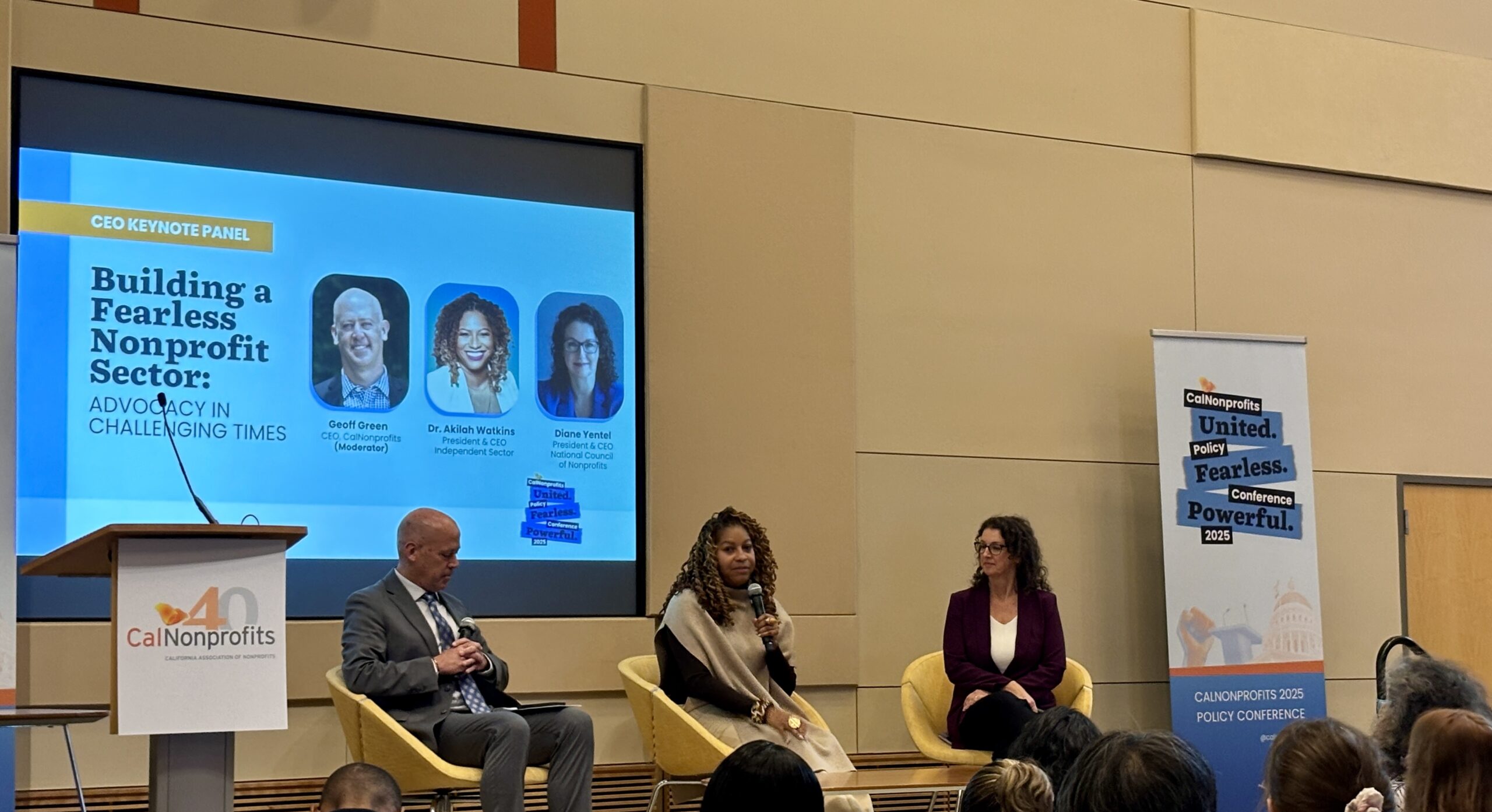
CalNonprofits’ Annual Policy Conference at The California Endowment in Los Angeles. The theme — “United, Fearless & Powerful”— underscored the urgency of this moment for nonprofits. With federal uncertainty and tightening budgets, nonprofit leaders must not only adapt but lead with clarity and courage.
This post summarizes key insights and strategic implications for nonprofit leaders navigating today’s complex policy and funding landscape.
- California Budget Outlook: Cautious Optimism
California’s fiscal outlook is better than expected, but 2026 will bring sharper challenges as federal cuts cascade into state programs.
Key Developments:
- AB1318 safeguards nonprofit 501(c)(3) eligibility.
- Nonprofit Equity Initiative advances fair representation.
- Advocacy continues for a dedicated Nonprofit Office in state government.
Strategic Insight:
Nonprofits cannot remain passive observers. Engage policymakers now—invite local representatives to board meetings and strengthen visibility. These relationships will be critical as ballot measures and budget negotiations unfold.
- National Landscape: Defending the Nonprofit Sector
The keynote panel highlighted the sector’s scale—and vulnerability.
Sector Snapshot:
- 1.9 million nonprofits nationwide
- 13.9 million Americans employed
- 33,000 nonprofits represented by the National Council of Nonprofits
Emerging Challenges:
- Government Shutdown threatens food security for 40 million Americans.
- Data Equity gap limits nonprofits’ ability to plan effectively.
- Public Service Loan Forgiveness changes could erode workforce retention.
- Johnson Amendment litigation may reshape lobbying rights.
- Reconciliation Bill paired tax wins with deep cuts to social programs.
Strategic Insight:
Nonprofits must invest in advocacy infrastructure and closely monitor federal developments. Financial planning should account for potential disruptions in funding streams and service demand.
- Health Equity Crisis: When Safety Nets Fray
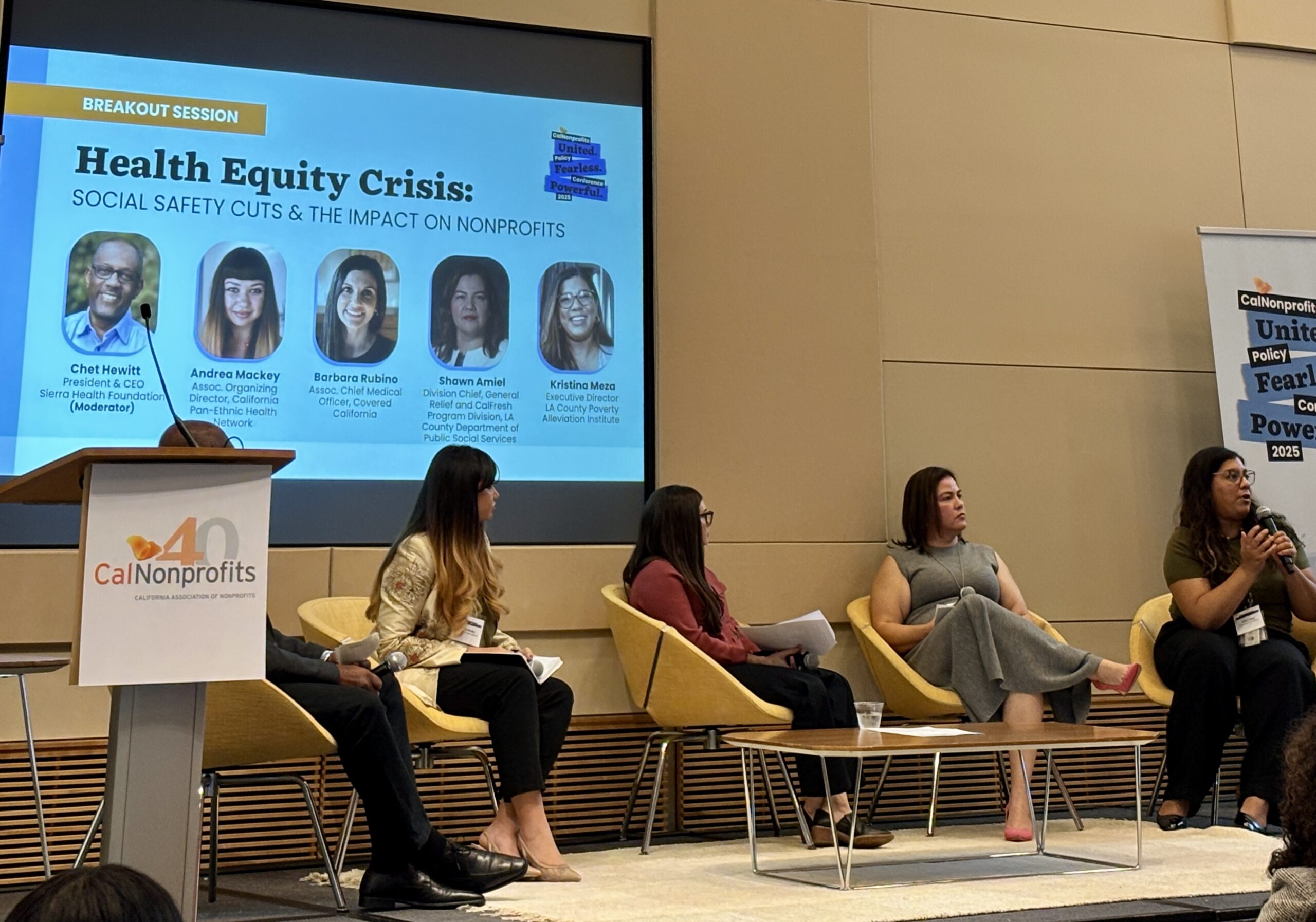
Federal retrenchment is creating a health affordability cliff.
The Numbers:
- 1.45 million Californians rely on CalFresh
- 1.3 million face Medi-Cal enrollment freezes
- 400,000 projected to lose coverage if tax credits expire
Without subsidies, premiums could spike from $80/month to $800/month, forcing families into untenable trade-offs between care and cost.
Strategic Insight:
Nonprofits serving vulnerable populations must prepare for surging demand in enrollment assistance and food access. Technology adoption and operational efficiency will be essential to manage eligibility redeterminations and service delivery.
- The Advocacy Imperative: Nonprofits as Policy Architects
Nonprofits are not just service providers—they are policy influencers. Yet, representation remains uneven.
Key Gaps Identified:
- No formal Nonprofit Office within California government.
- Limited visibility in legislative decision-making processes.
Strategic Insight:
Nonprofits must institutionalize advocacy within their governance structures. This means:
- Allocating board time for policy engagement.
- Training staff to understand legislative cycles.
- Building coalitions to amplify sector-wide priorities.
- Financial Resilience in an Era of Uncertainty
Budget pressures and federal retrenchment demand new financial strategies.
Conference Recommendations:
- Scenario Planning: Model multiple funding outcomes to anticipate revenue shocks.
- Diversification: Reduce reliance on single funding streams — especially government contracts.
- Liquidity Management: Maintain reserves to weather delays in reimbursements or grant disbursements.
Fairlight Perspective:
Financial resilience is not optional — it is a strategic advantage. Boards should integrate risk analysis into annual planning and adopt investment policies that balance mission and sustainability.
- Technology as a Capacity Multiplier
Operational efficiency emerged as a recurring theme, particularly for nonprofits facing eligibility redeterminations and service delivery bottlenecks.
Opportunities for Innovation:
- Automate benefits enrollment workflows.
- Use data dashboards to track program impact and compliance.
- Explore shared services models for back-office functions.
Leadership Insight:
Technology investments should align with mission-critical outcomes, not just administrative convenience. Nonprofits that leverage digital tools will be better positioned to scale impact under resource constraints.
- Equity at the Center
Panels on health and poverty alleviation underscored the disproportionate impact of policy shifts on vulnerable populations — including older adults, special education students, and communities of color.
Action Steps for Nonprofits:
- Embed equity metrics into program evaluation.
- Advocate for data transparency to inform policy.
- Design outreach strategies for populations facing access barriers.
Closing Reflection
The conference made one truth undeniable: uncertainty is the new normal. For nonprofit leaders, this is not a call for caution — it is a mandate for strategic courage. Advocacy, financial resilience, and operational innovation are no longer optional — they are the pillars of a fearless sector.
At Fairlight Advisors, we partner with nonprofits to translate complexity into clarity, ensuring your mission thrives even in turbulent times.
Ready to future-proof your nonprofit? Let’s start the conversation.

Fairlight Advisors
Latest posts by Fairlight Advisors (see all)
- Why Big Donors May Hesitate to Fund an Endowment From Scratch - September 10, 2026